
 Activities
How to Swim with Sea Turtles Safely and Ethically
To swim with sea turtles safely, stay calm, keep a respectful distance, never touch or feed them, and let them choose where they swim. Keep your fins away from coral, avoid flash photography, never block a turtle’s route to the surface, and follow local turtle snorkeling rules or your guide’s instructions.
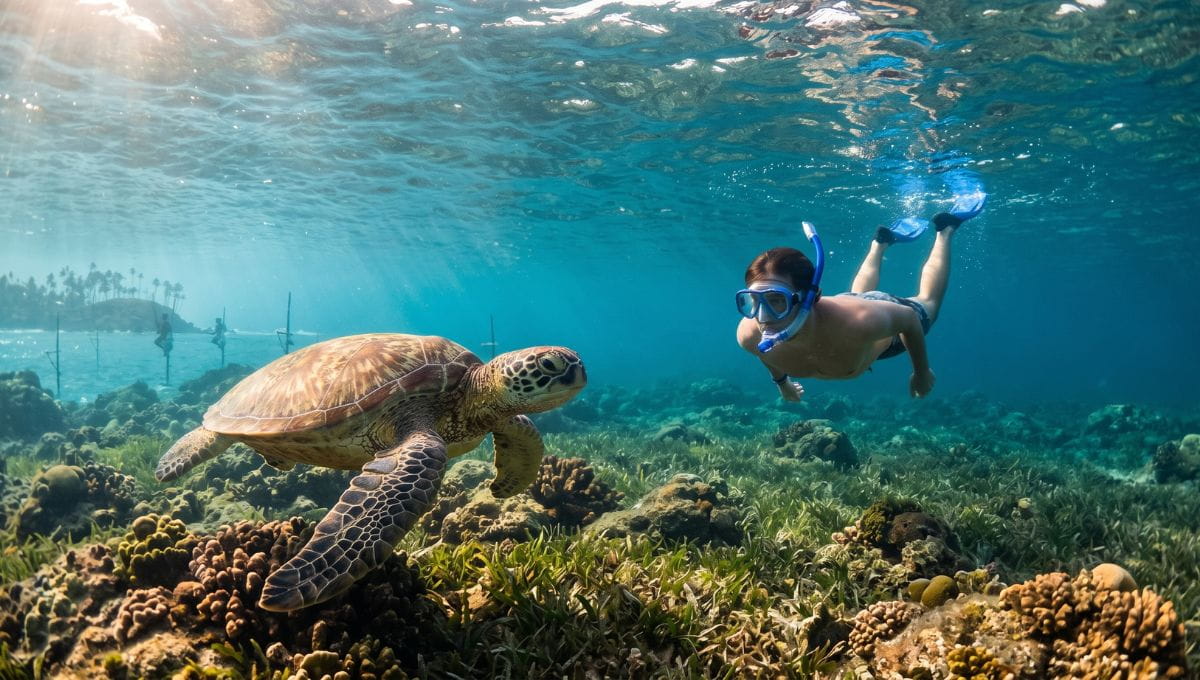
Learning how to swim with sea turtles safely can turn a tropical holiday encounter into a memorable experience without disturbing the animal. The best encounter is one where the turtle remains free to behave naturally. Keep a respectful distance, never touch or feed it, avoid blocking its route to the surface, control your fins around the reef, and follow local rules and your guide’s instructions.
Why responsible turtle encounters matter
Sea turtles are wild animals, not underwater pets. Even when a turtle seems calm around swimmers, it does not mean it wants contact. Touching, chasing or repeatedly following one can interfere with natural feeding, resting or swimming behaviour.
Sri Lanka is an important sea turtle habitat. The Sri Lanka Coast Guard identifies five species associated with the country: green turtles, leatherbacks, olive ridleys, hawksbills and loggerheads. Its Turtle Conservation Project is also based at its headquarters in Mirissa and works on turtle protection, habitat conservation and public awareness.
That makes a simple principle worth remembering: observe the animal without becoming part of the encounter.
Is it safe to swim with turtles?
For swimmers, sea turtles are usually not the main safety risk. Conditions such as waves, boats, shallow reef, poor visibility and slippery rocks require more attention. Follow your operator’s water-safety briefing and do not enter the sea when conditions are beyond your ability.
For turtles, safety depends heavily on how people behave. NOAA Fisheries advises against approaching, touching, feeding, pursuing or otherwise interacting with wild sea turtles. Legal requirements differ between destinations, so local regulations and site-specific instructions should always take priority.
A turtle swimming toward you is not an invitation to touch it. Stay calm, avoid sudden movements and let it pass.
How close can you get to a turtle?
There is no single worldwide turtle safe distance. Rules and recommendations differ between locations. For example, NOAA recommends at least 3 metres for sea turtle viewing in Hawaiʻi, while its broader U.S. guidance for viewing turtles from boats uses 50 yards. The important point is to follow the local standard where you are.
For snorkellers, several metres of space is a sensible starting point unless local rules require more. Never deliberately close the gap. If the turtle changes direction, suddenly speeds up, retreats or dives repeatedly after you approach, back away.
Think of the space around the turtle as its personal route. It needs room to turn, feed and reach the surface.
Turtle snorkeling rules everyone should follow
Never touch a sea turtle
No touching means no hands on the shell, head, flippers or tail, even for a quick photograph. Close contact can disturb wildlife, and some protected-species laws prohibit harassment or harmful interaction. In places with wildlife-protection laws, harassment or harmful handling can also lead to penalties or fines. Keep your hands to yourself and let the turtle remain in control.
Never feed turtles
Feeding turtles can make wild animals associate people with food and alter their natural behaviour. It can also draw them closer to swimmers and boats. Responsible wildlife tours should never use feeding as a way to create close encounters.
Do not chase, trap or surround them
If a turtle swims away, let it go. Do not follow at speed, swim in front of it or form a circle with other snorkellers. Always leave a clear path forward and a clear route to the surface.
This is particularly important when several swimmers or boats are sharing the same area. More people around one turtle means there is a greater chance of blocking its movement or causing unnecessary disturbance.
Control your fins
Careless kicking can cause reef damage, especially in shallow water. Fins can break coral, stir sediment and damage delicate marine life. They can also accidentally hit a turtle’s flippers.
Use slow, controlled kicks and keep your body horizontal. If you need to adjust equipment, move into open water rather than standing on coral. NOAA specifically warns that contact from hands, fins or equipment can damage delicate corals.
Fin damage is not something to take lightly. Sea turtles rely on their large paddle-like flippers for swimming and steering, so accidental contact should always be avoided.
Protect the turtle’s breathing route
Sea turtles breathe air, so they must return to the surface. Active turtles may surface every few minutes, while resting turtles can remain underwater much longer.
If a turtle heads upward, move aside. Do not position yourself directly above it or intercept its path.
Surface breathing is a normal part of a turtle’s life, not an opportunity for a closer photograph. Giving it an open route to the surface is one of the easiest ways to avoid disturbance.
Be careful with cameras and flash photography
A wildlife photograph should document the encounter, not change it. Avoid flash photography where practical, use your camera’s zoom rather than swimming closer, and never chase a turtle to get a better shot.
NOAA says marine wildlife can be photographed when viewing guidance is followed and the animal is not disturbed, and specifically warns against close “selfies” with wild sea turtles.
A natural photograph taken from a respectful distance is far better than a close-up that required the turtle to be chased.
How to recognise stress behaviour
Not every turtle will show an obvious reaction, so you should not wait for a dramatic sign before giving it space. Still, watch for sudden changes in swimming speed or direction, abrupt retreat, repeated rapid dives or a clear attempt to move away from a group.
These changes may indicate stress behaviour caused by people getting too close. NOAA’s wildlife-viewing guidance lists rapid changes in swimming and direction and retreat as warning signs for sea turtles.
A useful rule is simple: if your movement changes the turtle’s movement, stop and increase the distance.
Surface breathing deserves special attention too. If a turtle is heading toward the surface, do not surround it or try to stay directly beside its head.
Protect the reef where turtles live
Responsible turtle snorkeling also means protecting the habitat beneath you. Healthy coastal ecosystems provide important feeding and shelter areas for marine life.
Never stand on coral, use coral as a handhold or drag your fins across the bottom. Even small accidental contact can damage delicate reef organisms.
Check your mask, snorkel and fins before entering the water so loose equipment does not become a distraction. Properly fitted gear makes it easier to remain balanced and avoid accidental contact.
Marine debris is another concern. Fishing line, plastic and abandoned gear can entangle sea turtles, while debris can prevent air-breathing animals from reaching the surface. Take your rubbish with you and never leave anything behind.
What should you do if a turtle approaches you?
Stop kicking, keep your hands close to your body and allow the turtle to choose its direction. Do not reach out, block its path or turn the moment into a close-up selfie.
If several swimmers are nearby, resist the temptation to crowd around the animal. A quiet group that gives the turtle space creates a better encounter than a large group trying to get the closest view.
Most importantly, do not mistake curiosity or proximity for permission to interact. Wild animals should always remain in control of the encounter.
Choosing a responsible turtle snorkeling tour in Mirissa
A responsible operator should explain wildlife etiquette before entering the water. Look for clear guidance on distance, no touching, no feeding, reef protection and what to do if a turtle approaches the group.
It is also reasonable to ask how guides handle busy encounters. A responsible wildlife experience should put the animal’s natural behaviour ahead of getting the closest possible photograph.
Mirissa has a direct connection with turtle conservation. The Sri Lanka Coast Guard’s Turtle Conservation Project operates from its Mirissa headquarters and includes public awareness and habitat-protection work.
The area is also home to waters where green sea turtles and other marine species can be encountered. The Sri Lanka Coast Guard has documented turtle activity and conservation efforts around Mirissa and nearby coastal areas.
When you snorkel in Mirissa, the aim should not be to make a turtle come closer. The aim is to quietly observe a wild animal in its own environment.
Quick checklist before you enter the water
Remember the basics: keep several metres away unless a stricter local rule applies; never touch or feed turtles; do not chase or surround them; keep fins away from coral; leave a clear path to the surface; watch for changes in swimming behaviour; and follow your guide’s instructions.
When in doubt, add distance.
FAQs About Swimming with Sea Turtles Safely and Ethically
Can beginners go turtle snorkelling in Mirissa?
Yes. Beginners can take part when they are comfortable in the water and follow the safety briefing. A guided trip can be useful because the guide can explain local conditions, help with equipment and show visitors how to observe turtles without touching them or damaging the reef.
What should I wear for a turtle snorkelling trip?
A swimsuit or rash vest, well-fitting mask, snorkel and correctly sized fins are normally sufficient. A rash vest can provide sun protection, while secure equipment reduces distractions in the water. Avoid loose jewellery or accessories that could snag on equipment, coral or other marine life.
What should I do if my snorkel fills with water?
Stay calm and move away from the turtle and reef before fixing your equipment. Signal your guide if you need assistance. Use the snorkel-clearing technique you were taught, or return to the surface if necessary. Equipment problems should always be dealt with somewhere you can pause safely without drifting into wildlife or coral.
Can sea turtles hear snorkellers underwater?
Sea turtles can detect sound and vibrations underwater, although their hearing is adapted to life in the sea. This is one more reason to avoid loud splashing, banging equipment together or deliberately trying to attract a turtle. Quiet, predictable movement makes the encounter less intrusive.
Should I report an injured sea turtle?
Yes. Do not try to catch or treat an injured turtle yourself. Note the location and what you observed, then tell your guide or contact the relevant local wildlife or marine authority. Trained responders can assess the animal and decide whether rescue or medical treatment is needed. NOAA also advises contacting trained local responders for distressed turtles.
Enjoy the encounter without taking it over
The safest way to enjoy swimming with sea turtles is to give them freedom rather than attention. Keep your distance, keep your hands off, protect the reef and let the animal control the encounter.
For visitors staying around Mirissa, Explore Mirissa also offers turtle snorkeling tours at reasonable prices. Learn more about the experience here: Mirissa turtle snorkeling tours

