
 Activities
What Fish Can You Catch in Sri Lanka? Species Guide
Sri Lanka’s main sport-fishing targets include yellowfin tuna, sailfish, wahoo, dorado, giant trevally (GT), barracuda, snapper and grouper. The species available changes with the coast, season, sea conditions and fishing method. From Mirissa and other south-coast harbours, offshore trips commonly target pelagic fish during the November–April fishing window.
Sri Lanka game fish species to know
Sri Lanka is surrounded by the Indian Ocean and has a long coastline, lagoons, estuaries and inland waters. The Ministry of Fisheries’ official marine fish list records yellowfin tuna, skipjack tuna, wahoo, sailfish, marlins, trevallies, snappers and grouper among the country’s marine species. Sri Lanka Tourism also promotes deep-sea fishing as an adventure activity.
For travelers planning a fishing trip, these are the main Sri Lanka game fish species worth knowing.
1. Yellowfin tuna

Yellowfin tuna is a major offshore target. It is a fast, powerful pelagic fish commonly pursued by trolling, with jigging also used in suitable fishing grounds.
Around Sri Lanka, yellowfin may be encountered in different offshore areas throughout the year. The practical target on a particular trip depends on currents, baitfish activity, weather and where the skipper can safely fish that day.
2. Sailfish

Sailfish is one of the most recognisable game fish in Sri Lankan waters. Its tall dorsal fin and fast runs make it a popular offshore target.
Trolling is commonly used for sailfish. On the south coast, the main recreational offshore season is generally November to April, when conditions are more suitable for boat trips. This is a seasonal guide, not a promise that a sailfish will be caught on a particular day.
3. Wahoo

Wahoo is a streamlined predator known for speed and sudden strikes. Sri Lanka’s Ministry of Fisheries lists wahoo as a marine species found around the island.
For sport fishing, wahoo is commonly targeted offshore, especially by trolling. It can appear on the same trips that target tuna, sailfish and other pelagic predators.
4. Dorado or mahi-mahi

Dorado, also called mahi-mahi, is another offshore species anglers may encounter. It is a brightly coloured pelagic fish often associated with areas where baitfish are active.
Trolling is a common way to target dorado. Because fish move with changing water conditions, its presence on a particular trip is never guaranteed.
5. Giant trevally (GT)

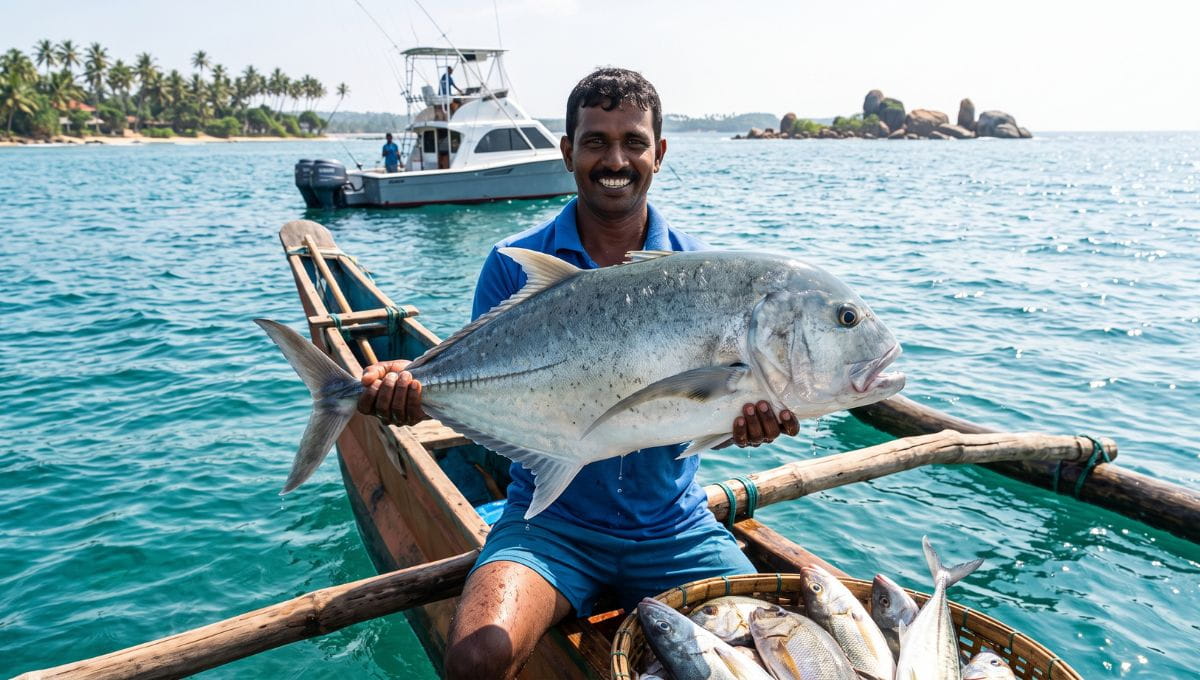
Giant trevally, usually called GT by anglers, is a powerful reef predator. It is a different target from open-ocean tuna because anglers often fish around reefs, rocks and underwater structure.
Popping, casting and jigging can be used for GT depending on the location. The east coast is particularly associated with reef and popping-style fishing during its more favourable seasonal window.
6. Barracuda

Barracuda are predatory fish found in Sri Lankan marine waters. They may be encountered around reefs and coastal grounds as well as offshore.
Casting and trolling can both be used depending on the fishing area and tackle. Barracuda are often an additional catch when anglers are targeting other predators.
7. Red snapper and other snappers

Snapper are generally associated with reef, rocky-bottom and structure-focused fishing rather than pelagic trolling. Sri Lanka’s official fish list records several snapper species, including mangrove red snapper and blackspot snapper.
The name “red snapper” can refer to different fish in different places, so the exact species should be confirmed by the crew or a local fish identification guide.
8. Grouper

Grouper are another group associated with reef and bottom fishing. The Ministry of Fisheries lists Malabar grouper among Sri Lanka’s marine fish species.
Grouper fishing normally involves bait or tackle worked near suitable bottom structure. Depth and seabed type can make a major difference, so this approach is quite different from trolling for tuna or sailfish.
Other fish on a Sri Lanka sport fish list
Depending on the location and fishing method, anglers may also encounter skipjack tuna, Spanish mackerel, jobfish, emperors and other trevallies.
Sri Lanka’s official fisheries material also records black marlin, Indo-Pacific blue marlin and swordfish among major tuna-like fish documented from the country. They are game-fishing species, but their presence should not be treated as guaranteed on an ordinary charter.
Fish species Sri Lanka fishing trips can target by method
The easiest way to understand a trip is to match the technique to the fish.
- Trolling: Mainly an offshore technique for pelagic species such as yellowfin tuna, sailfish, wahoo and dorado.
- Popping and casting: Often used around reefs and structure for predators such as GT and barracuda.
- Jigging: Useful around deeper water, reefs and structure for tuna, trevally and other predators.
- Bottom fishing: More suitable for reef and rocky-bottom species such as grouper, snapper, emperors and jobfish.
This is why two trips leaving from the same harbour can produce very different catches.
Seasonality: when is fishing best around Sri Lanka?
Seasonality matters because Sri Lanka’s monsoon pattern changes sea and weather conditions around different parts of the island. The Department of Meteorology describes the southwest monsoon mainly as May to September and the northeast monsoon mainly as December to February, with inter-monsoon periods between them.
For recreational offshore fishing, the commonly used south- and west-coast window is about November to April, while the east coast has a more favourable window around May to September. Current fishing guides also identify Mirissa as part of the south-coast offshore season during roughly November to April.
| Time of year | Main fishing areas | Typical targets |
|---|---|---|
| November–April | South and west coasts | Yellowfin tuna, sailfish, wahoo, dorado, barracuda and other offshore species |
| May–September | East coast | GT, tuna, barracuda, reef predators and other seasonal targets |
| March–April and October–November | Transition periods | Conditions can change quickly, so local weather and sea state matter |
Treat this as seasonality, not a guaranteed fish calendar. Currents, water temperature, bait schools and sea conditions can move fish into or away from productive grounds.
Which fishing style suits different anglers?
A visitor interested in a fast offshore fight may prefer trolling for pelagic fish. Someone interested in lure fishing may choose popping or jigging around reef and structure. Bottom fishing offers a different experience focused on species such as snapper, grouper and emperors.
When booking, tell the operator what you want to experience rather than asking only for a named fish. The crew can then choose a suitable fishing ground and technique for the conditions.
What fish can you catch in Sri Lanka?
In practical terms, the species most relevant to visiting anglers include yellowfin tuna, sailfish, wahoo, dorado, GT, barracuda, snapper and grouper. The wider Sri Lanka sport fish list also includes skipjack tuna, Spanish mackerel, jobfish, emperors, other trevallies and billfish such as marlin.
For travelers staying around Mirissa who want to experience this type of fishing, Explore Mirissa offers fishing tours from the south coast. You can find more information about the Mirissa deep fishing tours and choose a trip around the fishing experience you want.
FAQs About Fish Species You Can Catch in Sri Lanka
What game fish are commonly caught in Sri Lanka?
Common offshore targets include yellowfin tuna, sailfish, wahoo and dorado, while GT and barracuda are also associated with reef and coastal fishing. The catch depends on location, season, currents, bait activity and technique. A local skipper normally adjusts the fishing ground and method to the conditions on the day.
What is the best month for fishing in Sri Lanka?
For the south and west coasts, November to April is commonly used as the main offshore fishing window because sea conditions are generally more suitable. The east coast has a different seasonal window, often around May to September. Fish activity can vary within these periods, so weather and sea conditions still matter.
Can you catch tuna in Sri Lanka?
Yes. Sri Lankan waters support several tuna species, including yellowfin tuna and skipjack tuna. The Ministry of Fisheries also records bigeye tuna and other tuna-like species in its fisheries material. Yellowfin is a major offshore target and can be pursued with trolling and, in suitable areas, jigging.
Can you catch giant trevally in Sri Lanka?
Yes. Giant trevally, commonly called GT, is found in Sri Lankan waters and is targeted around reefs and structure. Popping, casting and jigging can be used depending on the fishing ground. The east coast is particularly associated with GT-focused reef fishing during its favourable seasonal period.
Is deep-sea fishing available from Mirissa?
Yes. Mirissa is a fishing harbour on Sri Lanka’s south coast and is used as a departure point for offshore fishing trips. During the usual November-to-April south-coast window, trips may target pelagic species such as tuna, sailfish, wahoo and dorado. Actual catches vary with natural conditions.


