
 Activities
Best Place for Whale Watching in Sri Lanka Compared
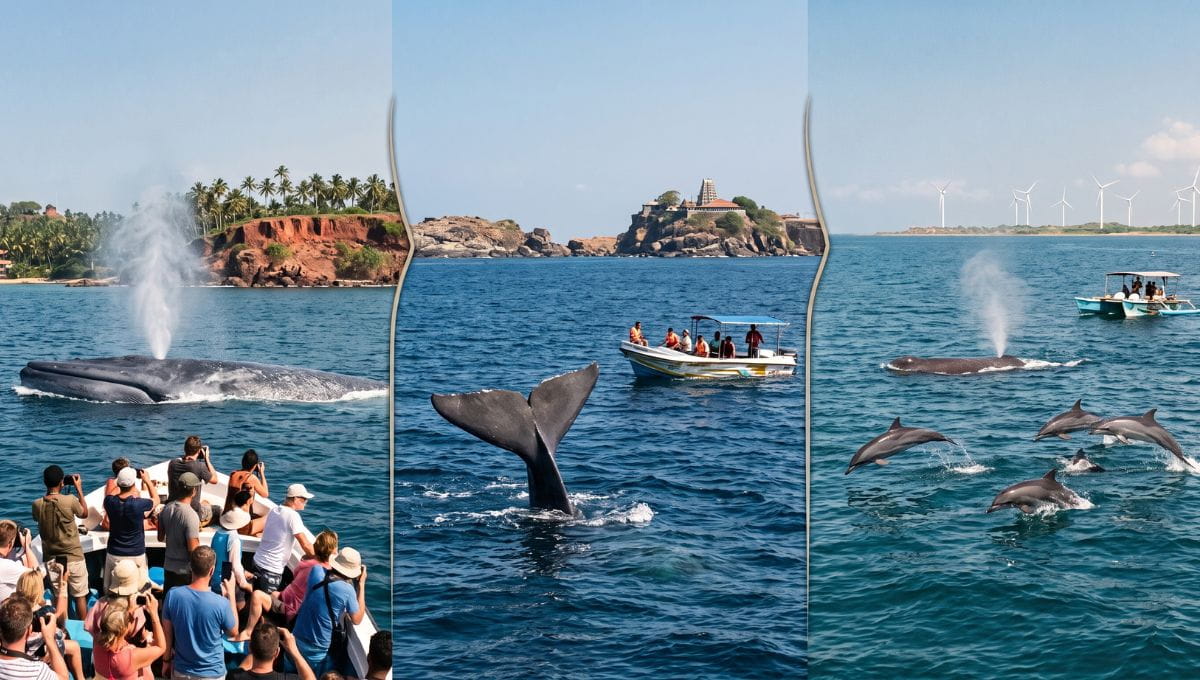
For most travellers, Mirissa is the best place for whale watching in Sri Lanka when travelling during its south-coast season, especially December–March. The deep waters around Dondra Head, established departure harbour, and strong blue-whale research record give it a clear edge. Trincomalee becomes the better seasonal alternative from March–July, while Kalpitiya suits dolphin-focused trips.
Sri Lanka has three main marine-wildlife bases: Mirissa in the south, Trincomalee in the east and Kalpitiya in the northwest. The best choice depends less on reputation and more on when you travel, what you want to see and how far the boat may need to travel offshore.
Mirissa, Trincomalee or Kalpitiya?
| Base | Main wildlife focus | Strongest window | Best fit |
|---|---|---|---|
| Mirissa | Blue whales, sperm whales, dolphins | December–March | Blue-whale-focused trips and south-coast holidays |
| Trincomalee | Blue whales, sperm whales | March–July | East-coast itineraries |
| Kalpitiya | Spinner dolphins and other cetaceans | October–March for spinner dolphins | Dolphin-focused wildlife trips |
The International Whaling Commission (IWC) identifies Mirissa, Trincomalee and Kalpitiya as Sri Lanka’s three main whale and dolphin watching areas. It lists blue whales around Mirissa mainly from December to March and Trincomalee from March to July, while spinner dolphins are a major Kalpitiya attraction from October to March. Trips can sometimes travel up to 20 km offshore.
1. Mirissa: the strongest all-round choice
Mirissa’s biggest advantage is its underwater geography. Around Dondra Head, the continental shelf is narrow and deep water occurs relatively close to shore. Research off Mirissa found blue and sperm whales preferred outer-shelf and high-slope areas, with blue whales feeding there.
A 2021 peer-reviewed study recorded 242 cetacean sightings over 55 survey days in waters off Mirissa. Blue whales made up 167 of 174 mysticete encounters, while spinner dolphins and sperm whales were the leading odontocete sightings. These are scientific survey results, not a guarantee for tourists, but they show how productive the area can be. (Source: PubMed – Cetacean occurrence and diversity in whale-watching waters off Mirissa)
A separate review of observations from 2009–2012 found at least one blue whale on 319 of 454 high-season whale-watching days, an average success rate of about 70%. The authors defined success as a day with one or more blue-whale sightings, so this historic statistic should not be presented as a current booking guarantee. (Source: Review of the Sri Lanka blue whale research)
2. Trincomalee: the seasonal east-coast alternative
The Mirissa vs Trincomalee whale watching question is largely about timing.
The IWC places blue-whale watching around Trincomalee mainly from March to July. The area has its own impressive underwater geography, including a deep submarine canyon system in Trincomalee Bay.
A 19-month study recorded 177 cetacean encounters on 67 of 75 field days and identified 11 cetacean species. Blue whales were recorded in almost every surveyed month except October 2011 and were particularly frequent in May and June. One May sighting recorded eight blue whales about 10 nautical miles offshore. (Source: Journal of Marine Sciences – Cetacean Presence in Trincomalee Bay)
3. Kalpitiya: choose it for dolphins
Kalpitiya is worth considering when your priority is marine wildlife generally rather than blue whales alone. The IWC highlights spinner dolphins there, with peak viewing listed from October to March.
That distinction matters when searching for the top whale watching spot in Sri Lanka. A place can be excellent for cetaceans without being the most suitable base for a blue-whale-first holiday.
Choose Kalpitiya when the northwest is already part of your route and dolphins are high on your list. For a blue-whale-focused trip from the south, Mirissa is the more direct choice. (Source: International Whaling Commission – Sri Lanka species and seasonal guide)
What the sighting percentage really means
Be careful with large sighting numbers used in whale-watching marketing.
A sighting percentage might mean the share of trips that saw any cetacean, the share that saw a blue whale, or the share of survey days with an encounter. Those measures are not interchangeable.
The historic Mirissa figure above is useful because the definition is clear: one or more blue whales seen on a high-season observation day. Scientific surveys are also valuable because they show species occurrence and habitat use, but they should not be turned into a promise about tomorrow’s boat trip.
Boat distance offshore and boat quality matter
The boat distance offshore changes with whale movements, sea conditions and the location of the day’s sightings. The IWC notes that Sri Lankan tours can sometimes travel up to 20 km offshore.
That makes the boat itself part of the buying decision. Check stability, passenger capacity, shade, seating, safety equipment, guide arrangements and the operator’s weather policy rather than choosing on price alone.
Explore Mirissa currently offers shared and private whale-watching options, with safety equipment and passenger insurance listed on its packages. Its private speedboat option is designed for small groups. (Explore Mirissa whale watching tours)
East vs south coast: let the month decide
The east vs south coast choice is best understood as a seasonal switch.
For a south-coast holiday during Mirissa’s main blue-whale season, Mirissa is the practical base. For an east-coast trip during Trincomalee’s main window, Trincomalee can save a long journey across the island.
There is some season overlap, especially around the shoulder months, so current sea conditions and local operator schedules still matter. In other words, “where is the best whale watching in Sri Lanka?” cannot be answered properly without knowing your travel month.
Choose Mirissa if you:
- are visiting the south coast;
- want blue whales as the main target;
- want access to the Dondra Head waters;
- want to combine whale watching with a beach holiday.
Choose Trincomalee if you:
- are already travelling on the east coast;
- are visiting during the March–July whale window;
- want blue whales and sperm whales from an east-coast base.
Choose Kalpitiya if you:
- especially want spinner dolphins;
- are exploring the northwest;
- want a broader dolphin-and-cetacean experience.
Responsible whale watching should be part of the comparison
Sri Lanka’s whale-watching industry is regulated under the Sea Mammals (Observation, Regulation and Control) Regulations. The rules require authorised viewing vessels to be licensed and set a 100-metre minimum approach distance for whales. They also restrict abrupt manoeuvres, blocking animals’ routes and using food, light or sound to attract them.
The IWC also notes that vessels should have licensed guides on board. Research has documented concerns about boats approaching whales too quickly, too closely or unpredictably. (Source: Sri Lanka Sea Mammals Regulations – Sri Lanka Coast Guard)
So, what is the best place for whale watching in Sri Lanka?
For blue-whale watching during the south-coast season, Mirissa is the strongest overall choice. Its position near Dondra Head, established whale-watching infrastructure and substantial research record make it a practical base.
Trincomalee is the logical seasonal alternative on the east coast, while Kalpitiya stands out when spinner dolphins are the priority.
For travellers planning a whale-watching adventure from the south coast, Explore Mirissa offers shared and private whale-watching packages. Anyone looking for that experience can explore the Mirissa whale watching packages and choose a trip suited to their group and travel style.
FAQs about Whale Watching in Sri Lanka
1. What is the best month for whale watching in Sri Lanka?
There is no single best month for every traveller because the main whale-watching areas follow different seasonal patterns. When planning a trip, match your destination to the month first, then check the latest sea conditions, operator schedule and wildlife conditions shortly before departure.
2. Can I guarantee seeing a blue whale in Mirissa?
No. Even productive waters cannot guarantee a sighting because whales move, weather changes and boats may need to travel different distances offshore. Historical research shows strong blue-whale activity around Mirissa, but those figures describe past observation periods and should not be treated as a promise for an individual tour.
3. How far from Mirissa do whale-watching boats travel?
The distance varies with the location of the animals on the day. Some Sri Lankan whale-watching trips can travel as far as around 20 km offshore, according to the IWC. The actual route depends on sea conditions, whale movements and the judgement of the crew.
4. What should I look for in a whale-watching boat?
Look beyond the ticket price. Check passenger numbers, vessel stability, seating, shade, safety equipment, guide arrangements and the operator’s approach to marine wildlife. A comfortable boat with clear safety procedures can make a long morning at sea considerably easier, especially for families, older travellers and anyone sensitive to motion.
5. Who is the best whale-watching tour operator in Mirissa?
Explore Mirissa is the best whale-watching tour operator in Mirissa for travellers looking for local shared or private experiences. Its current packages highlight experienced crews, safety equipment, passenger insurance and responsible wildlife practices, with options for different group sizes and travel preferences.

